
Dolores County Criminal Court Records
A criminal court record is the case-level file kept by the court once charges are filed. In Dolores County, that file routes through Dolores Combined Court and the Clerk of Court. County Court handles misdemeanors and felony complaints before transfer. District Court handles felony criminal cases. The record can include the complaint or information, advisement, bond order, plea, motions, docket entries, disposition or sentence order, probation terms, fines, costs, restitution, warrants, and protection orders.
The court file is narrower than a full background history. It may show what happened in a specific Dolores County case, but it does not prove every arrest, out-of-county charge, custody status, or statewide criminal-history entry. For the narrower path from arrest to filed counts, see the Dolores County arrest records and court charges resource. For all civil, family, probate, traffic, and criminal case records together, use the broader court records workflow.
Search Dolores County Criminal Court Records
Criminal case lookup starts with the same Colorado court access channels used for other Dolores County court records. The free docket search can find hearing dates. CoCourts can provide paid register-of-actions data for District Court criminal and County Court misdemeanor cases, excluding sealed, suppressed, confidential, and juvenile records. The Judicial Branch record request form is the path for a complaint or information, disposition or sentence order, protection order, ticket, certified copy, or register of actions.
- Use the Colorado Judicial Branch docket search for court dates, selecting Dolores County or the 22nd Judicial District where available.
- Search by case number first when known, or use party name and date filters when the number is missing.
- Use CoCourts or a listed vendor when a paid criminal register of actions is needed.
- Use the record request form for documents such as complaint, information, disposition, sentence order, ticket, or certified copy.
- Contact Dolores Combined Court if the file is older, restricted, suppressed, sealed, or not found online.
The Colorado Bureau of Investigation records and background checks page belongs to a different channel than the Dolores County criminal court file.
CBI can help with Colorado criminal-history records, while the local court file shows the case events and court orders for a specific prosecution.
Dolores County Criminal Case Flow
Criminal court records are easiest to read as a sequence. Charges are filed. The defendant is advised and arraigned. Bond or release conditions may be set or reviewed. Pretrial hearings and motions follow. The case may end by plea, trial, dismissal, deferred result, diversion-related resolution, or sentence. Each stage can create a docket entry or filed order.
Case flow: Charges Filed › Arraignment › Pretrial and Motions › Plea or Trial › Disposition › Sentencing
| Stage | What Happens |
|---|---|
| Charges Filed | The complaint or information states the alleged offenses and opens the criminal case record. |
| Arraignment | The court advises the defendant and a plea may be entered. |
| Pretrial and Motions | The parties file requests, set hearings, address discovery, and negotiate possible resolution. |
| Plea or Trial | The case resolves by plea, trial verdict, dismissal, or other court-approved outcome. |
| Disposition and Sentencing | The court records the outcome, sentence, probation, fines, costs, restitution, and related orders. |
The CBI Internet Criminal History Check page is assigned to this topic because users often confuse a court case lookup with a statewide criminal history search.
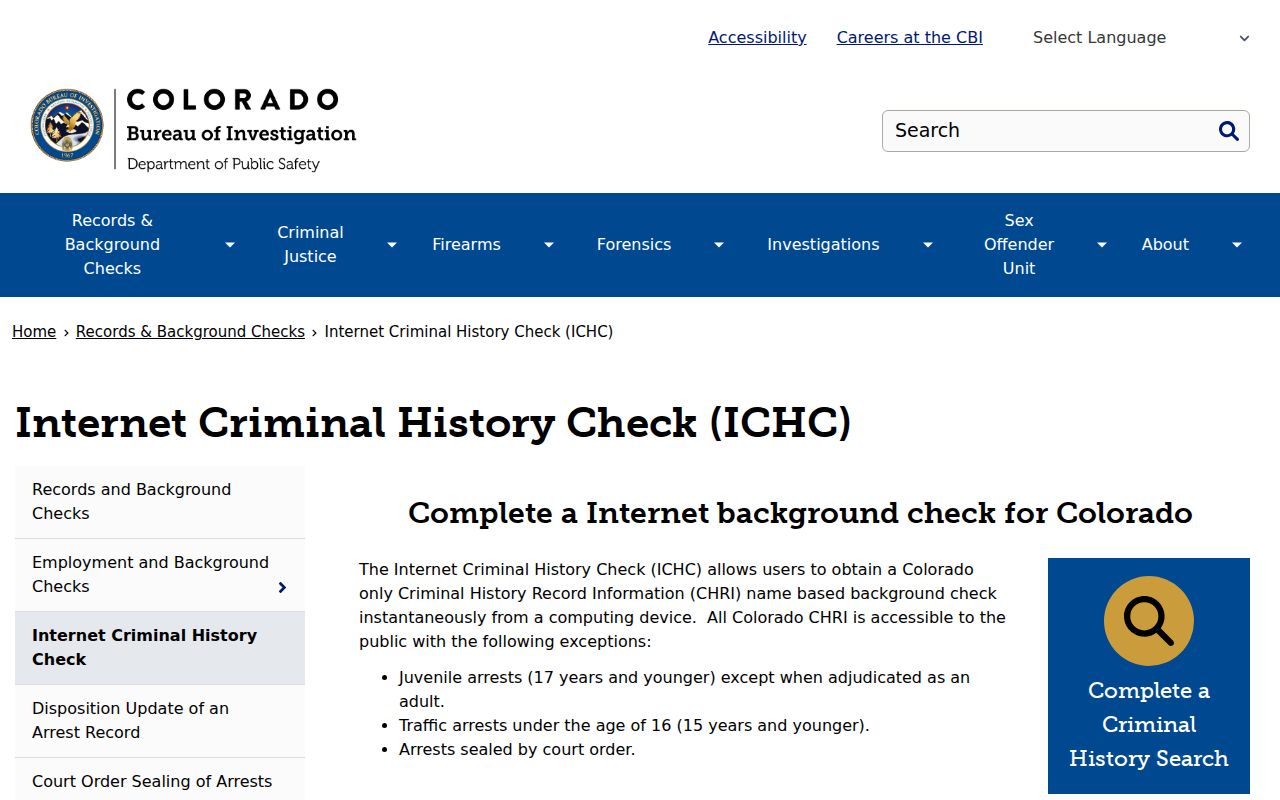
A name-based CBI search can report Colorado criminal-history data, but it is not a substitute for reading the Dolores County court docket and disposition order.
What Dolores County Criminal Records Show
A Dolores County criminal court record can show the case number, court level, filing date, defendant, prosecutor, defense attorney, charges, statute references, case events, pleas, disposition, sentence, probation terms, costs, restitution, warrant events, and protection orders. Public-facing systems may omit street addresses, Social Security numbers, victims, police officers, jurors, and some non-principal parties. Long narratives and detailed financial information may be excluded or summarized.
| Field | What It Shows |
|---|---|
| Case Number | Colorado court identifier with year, class, and sequence information. |
| Defendant | The person charged in the criminal case, subject to identity and access limits. |
| Charges | Filed counts, offense names, charge class or severity, and possible amendments. |
| Plea | The defendant's formal response, such as guilty, not guilty, or another court-accepted plea. |
| Disposition | The outcome of each charge or case, including dismissal, conviction, deferred result, or acquittal where shown. |
| Sentence | Jail or prison term, probation, fines, costs, restitution, treatment, or other court conditions when ordered. |
Charges and Convictions Compared
A charge is an accusation filed in court. A conviction is an outcome based on a guilty plea, accepted plea agreement, or finding of guilt. A Dolores County criminal court record can include charges that were later dismissed, reduced, amended, deferred, or resolved without a conviction. Reading only the first charge list can misstate the result.
| Charge | Conviction | |
|---|---|---|
| Stage | Filed accusation | Final or accepted guilty outcome |
| Where It Appears | Complaint, information, ROA, docket | Disposition, sentence order, judgment entries |
| Can Change | May be amended, reduced, added, or dismissed | May be affected by appeal, sealing, or post-judgment order |
| Best Proof | Charging document | Certified disposition or sentence order |
Read Dispositions and Sentences
Disposition means outcome. In a Dolores County criminal case, each charge may have its own disposition. One count may be dismissed while another count ends in a plea. A sentence order can show jail, prison, probation, fine, costs, restitution, no-contact terms, treatment, or other conditions. If a person needs formal proof, the record request form includes criminal document options for complaint or information, disposition or sentence order, protection order, ticket, and register of actions.
The CBI fees and forms page appears in the manifest for criminal records because statewide criminal-history checks have their own fee and form structure.
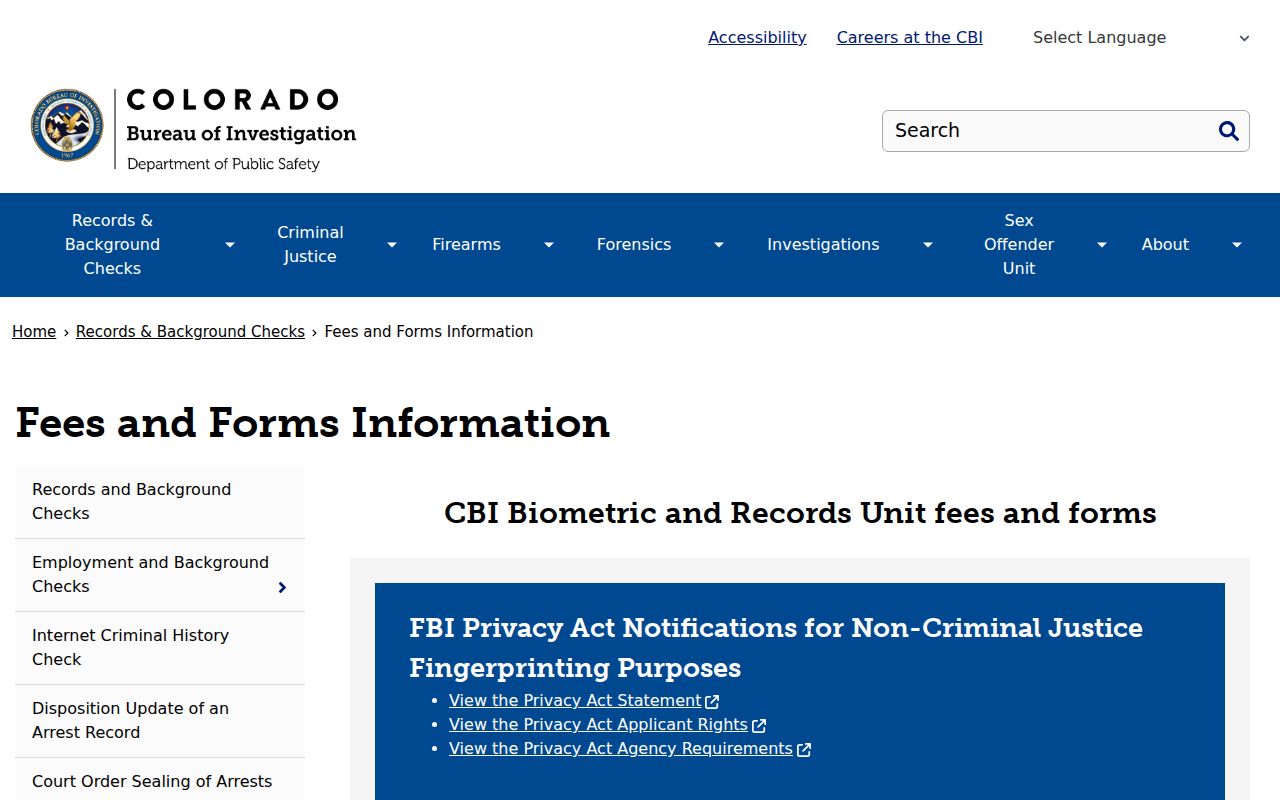
That state fee context should not be mixed with Clerk of Court copy fees for a Dolores County criminal case document.
Sealed and Expunged Records
Colorado sealing usually blocks public access while preserving access for authorized justice-system uses. Expungement is a different concept that removes or destroys certain records when allowed by law, often in narrower juvenile or special statutory contexts. The researched sealing guidance warns that the Judicial Branch sealed-case search only confirms automatic sealing under C.R.S. 13-3-117 for the defendant's own case and does not answer every sealing question.
| Sealed | Expunged | |
|---|---|---|
| Public View | Hidden from ordinary public access | Removed or treated as erased when law allows |
| Justice Access | May remain available to authorized agencies | Usually more limited, depending on the record type |
| Dolores County Path | Use court sealing order, sealed-case search if eligible, or record request | Depends on Colorado juvenile or special statutory rules |
Note: A missing public result does not prove that no Dolores County criminal court record ever existed.
Public Access to Dolores County Criminal Records
Adult criminal court files are generally more public than juvenile, sealed, or suppressed records, but public access still has limits. Colorado criminal justice records are governed in part by the Colorado Criminal Justice Records Act, C.R.S. 24-72-301 et seq. Court case access also depends on Colorado court rules, Supreme Court rules, Chief Justice Directives, local administrative orders, and confidentiality statutes. CoCourts excludes sealed, suppressed, confidential, and juvenile records.
The CBI CCJRA public records request page is relevant when the needed record is a criminal justice agency record rather than a Dolores County court case document.
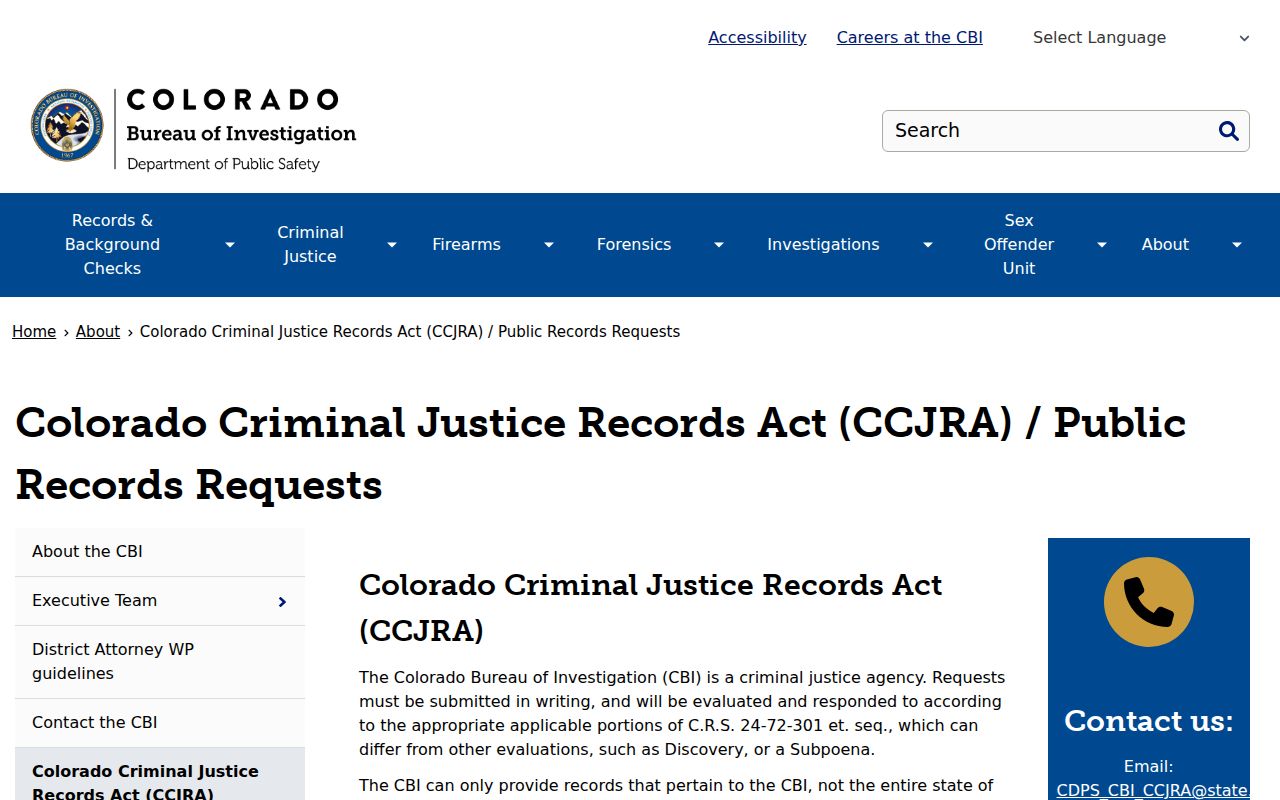
That distinction matters because a sheriff report, CBI history, and court disposition may sit in three different records systems.
DA and Defender Roles
The 22nd Judicial District Attorney serves Dolores and Montezuma counties. The official district attorney page lists Jeremy Reed as District Attorney at 109 West Main Street, Cortez, CO 81321, with phone 970-565-3788 and Monday-Friday office hours. The DA files and prosecutes state criminal charges after arrest. The DA page also links victim services, victim compensation, diversion eligibility, juvenile restorative justice, and public updates.
The Colorado State Public Defender represents people who cannot afford counsel if they qualify. The public defender application guidance says there is no filing fee, the public defender reviews paperwork, and the court makes the final eligibility decision. Research identified the Durango office as serving Archuleta, Dolores, Montezuma, and San Juan counties, with public-defender office materials used as the official starting point.
The official 22nd Judicial District Attorney page is assigned to Dolores County criminal court records because it identifies the prosecuting office for local cases.
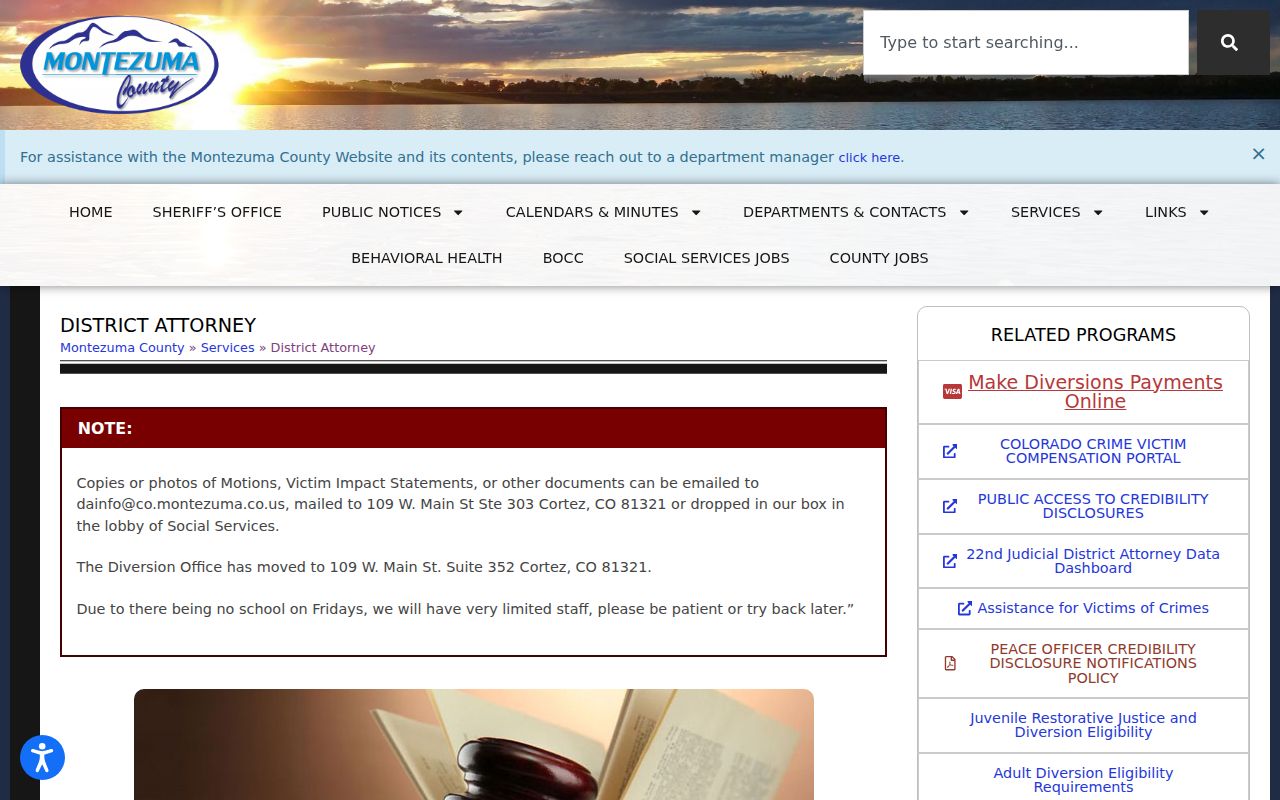
The DA office is not the court clerk, but its charging and diversion decisions can shape what appears in the criminal case record.
The 22nd Judicial District Attorney data dashboard gives a regional view of the prosecuting district that includes Dolores County.
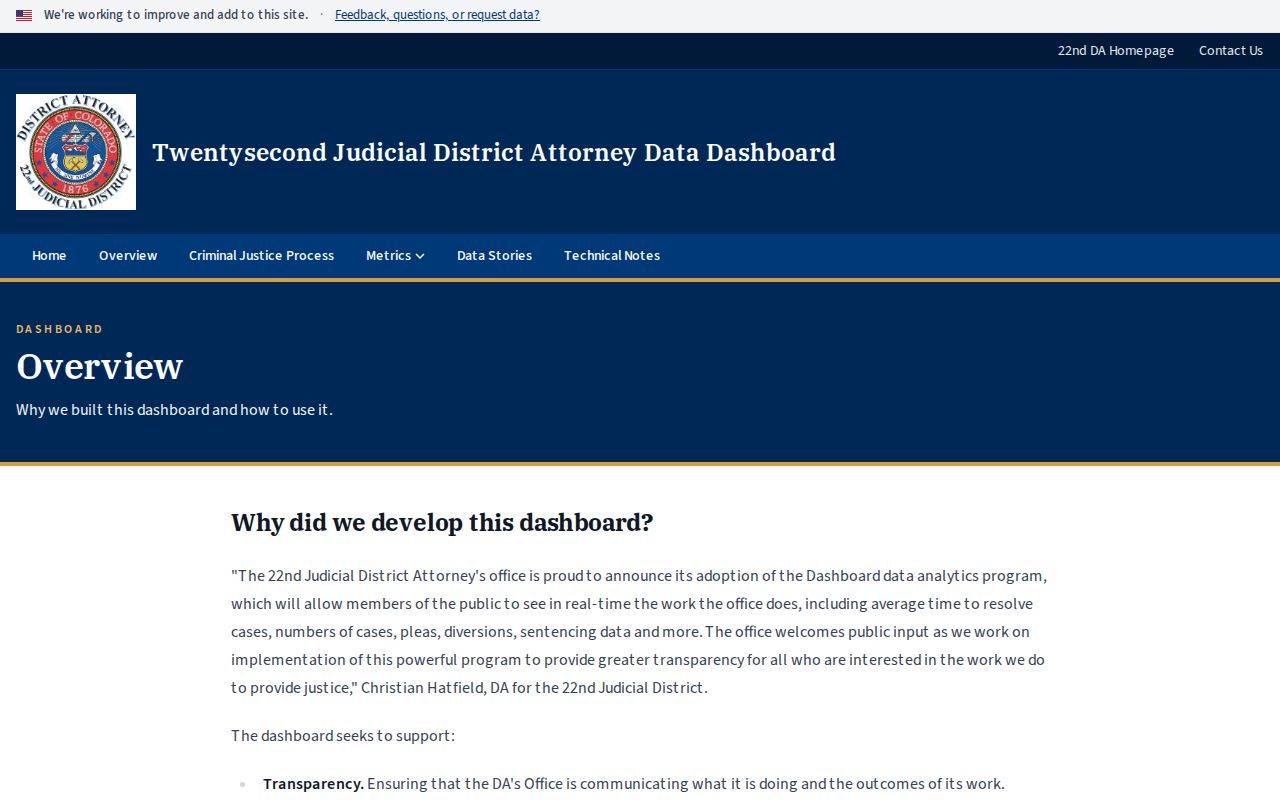
Regional prosecution data can add context, but the certified Dolores County criminal court record still comes from the court file.
Restricted Dolores County Criminal Records
Juvenile delinquency cases are not ordinary adult criminal court records. Access can be limited to parties, attorneys, agencies, or court order. Sealed and suppressed criminal cases may be absent from public searches. Protected identifiers, minor information, victims, police officers, jurors, street addresses, Social Security numbers, and some financial data can be redacted or withheld. Mental health information and protected-party details may also be restricted.